How to Become an AI Engineer in 2026: A Practical Roadmap!
Artificial Intelligence is moving from research labs into everyday products. From recommendation systems and intelligent search to generative AI assistants and autonomous agents, companies are increasingly building software around AI.
For students and developers, the challenge is not simply learning “AI.” The bigger question is: What should you learn first, and how do you turn those skills into real projects?
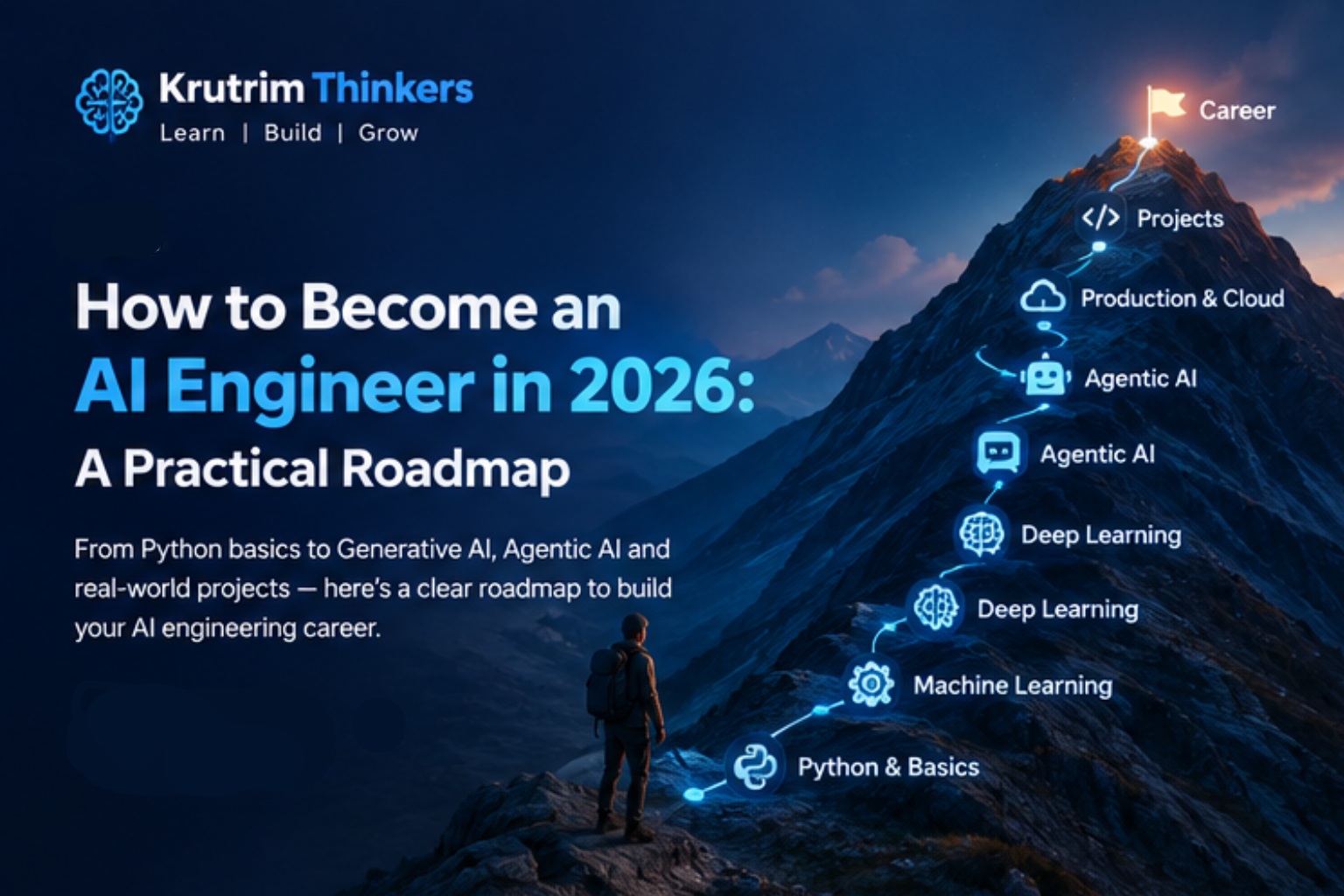
A practical AI engineering journey starts with strong fundamentals and gradually moves toward machine learning, deep learning, generative AI, production deployment, and real-world projects.
1. Start With Programming Fundamentals
Python remains one of the most useful languages for AI and machine learning development.
Before jumping into advanced models, build confidence with:
- Python programming
- Data structures
- Functions and modules
- Object-oriented programming
- SQL
- APIs
- Git and GitHub
These fundamentals will help you understand how to manipulate data, build algorithms, and integrate AI models into applications.
2. Learn Machine Learning
Once your programming foundation is strong, move into machine learning.
Important concepts include:
- Supervised learning
- Unsupervised learning
- Regression
- Classification
- Clustering
- Feature engineering
- Model evaluation
- Statistics and probability
The goal should not be memorizing algorithms. Instead, learn how to identify a problem, prepare data, select an approach, train a model, and evaluate the result.
3. Move Into Deep Learning
Deep learning becomes important when working with complex data such as images, text, audio, and large datasets.
Topics worth exploring include:
- Neural networks
- PyTorch
- Natural Language Processing
- Computer vision
- Transformers
- Model training and evaluation
At this stage, projects become increasingly important because they help connect theoretical concepts with practical implementation.
4. Learn Generative AI
Generative AI has introduced a new layer to modern software development.
Developers can now build applications around:
- Large language models
- Prompt engineering
- Embeddings
- Vector search
- Retrieval-Augmented Generation
- AI-powered applications
Instead of simply using an AI chatbot, the next step is learning how to integrate AI capabilities into useful software.
5. Explore Agentic AI
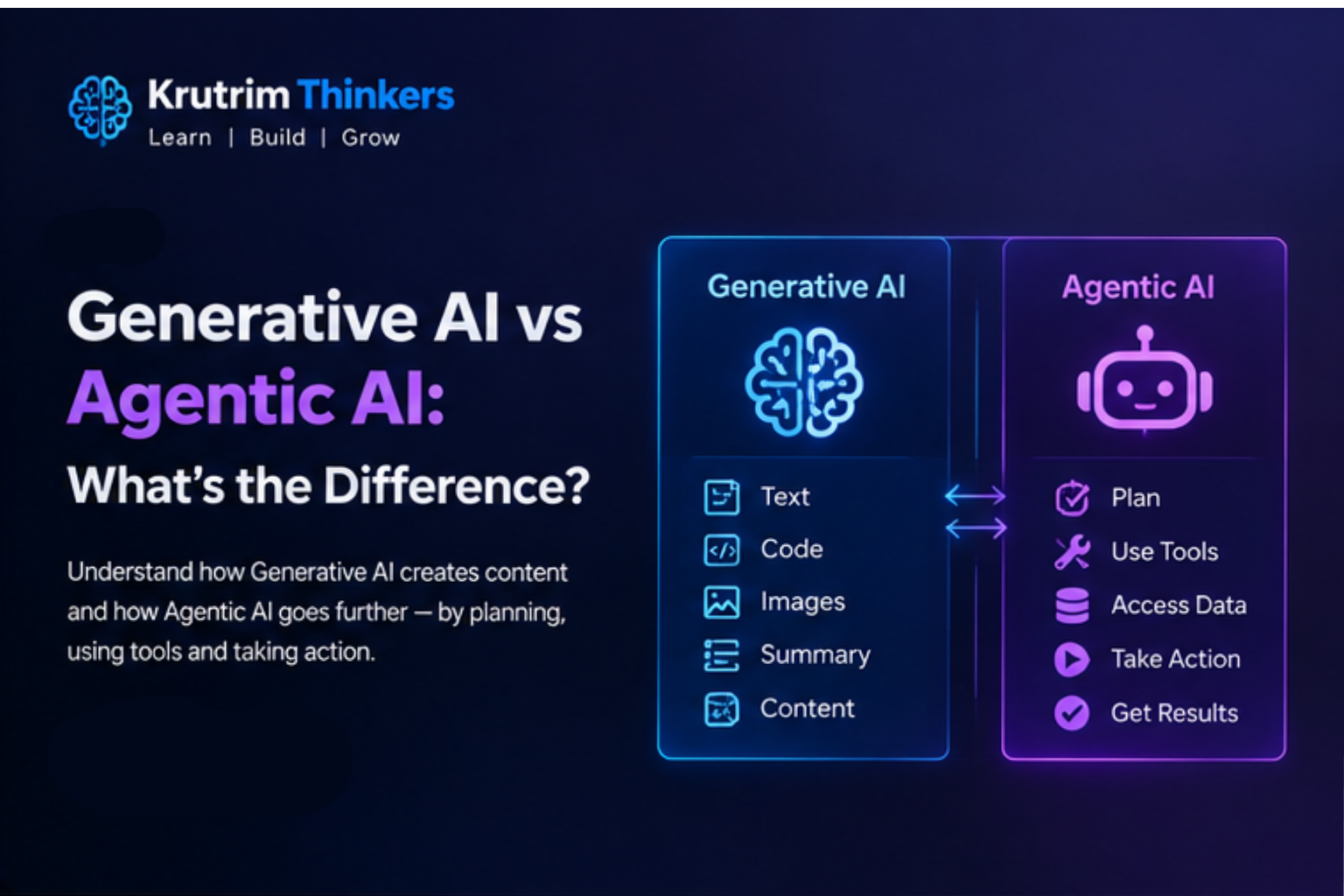
The next stage is moving from AI that generates responses to systems that can perform tasks.
Agentic AI applications can combine models with:
- Tools
- APIs
- Memory
- Workflows
- Data sources
- External systems
This makes it possible to build applications that can reason through a task, select tools, and execute multiple steps.
6. Learn Production AI
Building a model is only one part of becoming an AI engineer.
Real applications also require:
- FastAPI
- Docker
- Cloud deployment
- Monitoring
- MLOps
- API security
- Scaling
This makes it possible to build applications that can reason through a task, select tools, and execute multiple steps.
7. Build a Capstone Project
A strong portfolio should demonstrate what you can build rather than only what courses you have completed.
For example, you could build:
- An AI document assistant
- A customer-support agent
- A recommendation system
- An AI-powered analytics dashboard
- A RAG knowledge platform
- An automated business workflow
Document your architecture, GitHub repository, technology choices, and results.
8. Prepare for the Job Market
The final stage is turning technical knowledge into career readiness.
Your preparation can include:
- Portfolio development
- GitHub projects
- Technical interviews
- System-design basics
- Resume preparation
- Employer-oriented projects
- Communication skills
Krutrim Thinkers structures its AI learning journey across Foundation, Machine Learning, Deep Learning, Generative AI, Agentic AI, Production AI, Capstone and Hiring stages.
The most valuable skill is the ability to take an idea, turn it into a working system, and explain how it works.
Start with the fundamentals, build continuously, and let your projects demonstrate your skills.